Best Flooring for Basement
Flooring Expert & Author
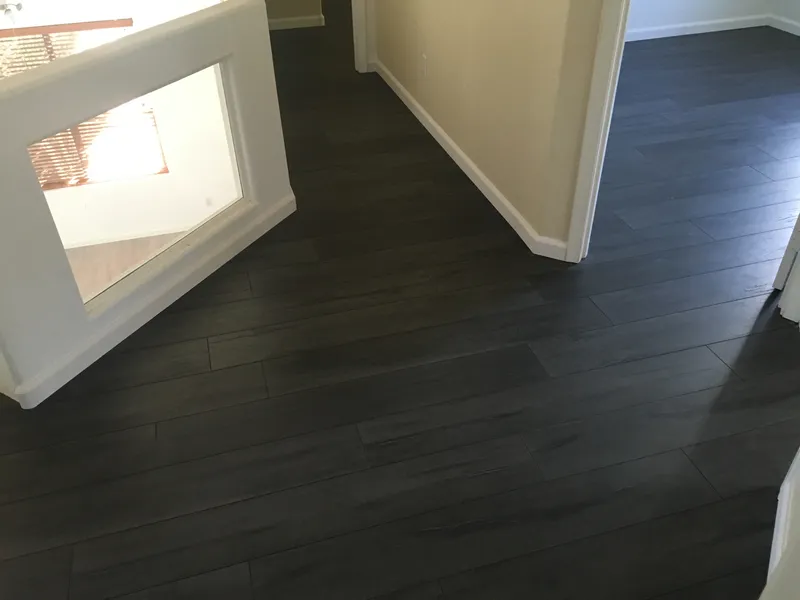
The best flooring for a basement is usually rigid-core luxury vinyl plank (LVP), with porcelain tile and engineered wood as alternatives in the right conditions. Solid hardwood and standard carpet are the poorest fits. Whatever you pick, the concrete slab has to be tested for moisture first, because moisture is the most common reason basement floors fail. This guide compares the main options and explains what to check before installation. It is written for homeowners in Waukesha and across Southeast Wisconsin.
Why basements are hard on flooring
A basement floor is usually a concrete slab that sits below grade, in contact with the ground. Concrete holds and passes moisture, so a slab that looks and feels dry can still give off enough moisture vapor to damage the floor on top of it. Wagner Meters, a maker of moisture meters, calls moisture one of the biggest causes of basement flooring failures and says to check the slab before installing any flooring. Basements also run cooler than upper floors, which affects how a floor feels underfoot.
The best basement flooring options compared
- **Rigid-core LVP:** the most common choice for basements. The planks are plastic-based and do not swell like wood, and a single damaged plank can be replaced. Glue-down versions are the exception: Wagner Meters notes that slab moisture can break down the adhesive.
- **Porcelain or ceramic tile:** Wagner Meters describes tile as easy to install over concrete and tolerant of traffic and moisture. The drawbacks are a cold surface and grout that needs upkeep.
- **Engineered hardwood:** a better wood choice than solid hardwood because it is more dimensionally stable. It still needs a dry slab and a product rated for below-grade use.
- **Laminate:** budget-friendly, but its fiberboard core swells when wet. Wagner Meters says plainly that laminate does not handle water well. It can work in a basement that has tested dry, with a moisture-rated product.
- **Carpet:** warm, but it handles moisture and flooding poorly. If the slab has any moisture issue, carpet is the riskiest covering.
What to avoid: solid hardwood below grade
Wagner Meters advises against solid hardwood in basements, because basements are below grade and solid wood expands and contracts with moisture, which can cause cupping or buckling. If you want the look of wood, rigid-core LVP or engineered hardwood is the safer way to get it. For how those materials compare in our climate, see our guide to LVP vs. laminate vs. hardwood in Wisconsin homes.
Test the slab before you choose
Moisture testing comes before flooring. Wagner Meters describes a two-step approach: screen the slab with a concrete moisture meter, then run an ASTM F2170 in-situ relative humidity test where the screening raises a concern. Armstrong's installation guide for luxury vinyl tile also says concrete should be moisture tested, using either a moisture vapor emission rate (MVER) test or an in-situ relative humidity probe, before resilient flooring goes down. The allowed reading is not one number for every floor. Each manufacturer sets its own limit, so the installation guide for the product you buy decides whether your slab is dry enough.
Flatness matters too
Basement slabs are often not perfectly flat. Floating floors such as click-lock LVP need a flat surface or the joints can flex and separate. If your slab has low spots, they are usually filled with a patching or self-leveling compound before the floor goes down. See our guide to self leveling concrete for how that works. Our sub-floor preparation and repair service covers this step.
A note on radon
Wisconsin homeowners often ask whether new flooring or sealing the slab fixes radon. The Wisconsin Department of Health Services says the EPA action level is 4 picocuries per liter (pCi/L), and that a certified contractor should be hired when a test comes back above it. It also says sealing cracks alone has not reduced radon much and is more likely to help only with large cracks. Sub-slab depressurization, a pipe and fan system that vents soil gas outside, is the method it describes for lowering radon. Flooring is not a radon fix, so test your basement before a finishing project and treat any result above the action level separately.
Basement flooring installation in Waukesha, WI
Illustrious Flooring installs basement floors for homeowners in Waukesha, Oconomowoc, Brookfield and across Southeast Wisconsin. Kyle Hedin is a Certified Flooring Installer (CFI #17580) through the International Certified Floorcovering Installers Association. During a free in-home estimate we look at the slab, check for flatness and moisture concerns, and tell you which floors suit the space. Our work carries a 5-year workmanship warranty. Call (262) 683-5301, Monday to Friday, 9 AM to 5 PM, or request your estimate online. You can also read how LVP is installed in our LVP flooring installation guide.
Questions about basement flooring
What is the most waterproof flooring for a basement?
Rigid-core LVP and porcelain tile are the most moisture-tolerant common options. Waterproof claims have limits, so ask the manufacturer what its claim covers, and remember that a floor does not stop moisture from coming through the slab.
Can you put hardwood in a basement?
Solid hardwood is not recommended below grade. Engineered hardwood is the better wood choice and can work over a dry slab when the product is approved for it.
Do I need a subfloor in a basement?
Not always. Many LVP and tile floors go directly over a tested, flat slab. A subfloor layer can add warmth and a flatter surface, and some wood products call for one. The product's installation guide decides.
Is LVP or laminate better for a basement?
LVP is usually the better fit, because laminate's fiberboard core can swell when it gets wet. Laminate is only worth considering in a basement that has tested dry.
Sources
- 8 Flooring Options for Your Basement - Jason Spangler, Wagner Meters, last updated October 26, 2026, option comparison and moisture testing guidance.
- Luxury Vinyl Tile Installation System (glue-down) installation guide - Armstrong Flooring, PDF created March 25, 2021, concrete moisture testing requirements.
- Lowering Your Home's Radon Levels - Wisconsin Department of Health Services, radon action level, sealing and sub-slab depressurization.
Kyle Hedin is the founder of Illustrious Flooring in Wales, Wisconsin, specializing in high-quality hardwood, LVP, and laminate flooring installations. With over 10 years of experience in the flooring industry, Kyle brings expert craftsmanship and a keen eye for detail to every project in Waukesha County and Southeast Wisconsin. His commitment to clear communication and client satisfaction sets Illustrious Flooring apart.
Related Flooring Services
Serving Waukesha, Brookfield, Oconomowoc, New Berlin, Menomonee Falls & SE Wisconsin.
Planning a Flooring Upgrade?
Get a clear, honest quote from Illustrious Flooring.