What Is LVP Flooring? Layers, Pros, Cons and Where It Fits
Flooring Expert & Author
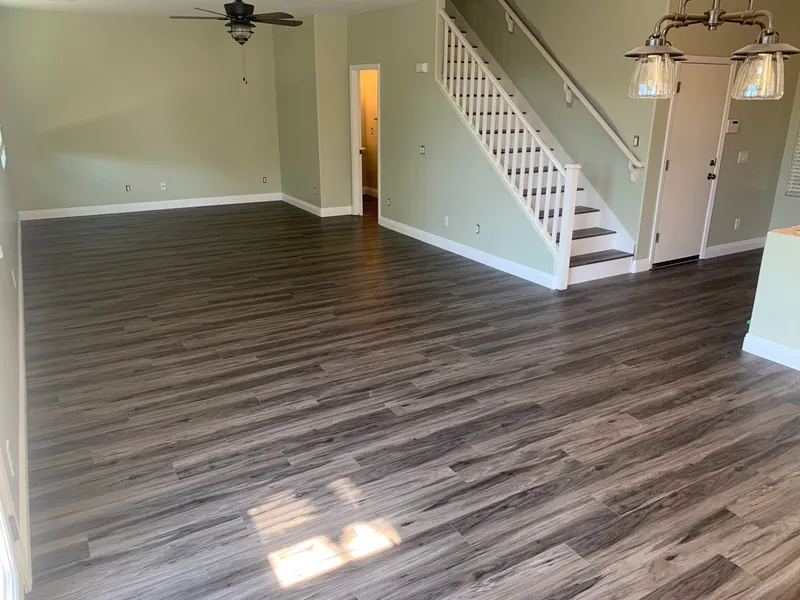
LVP flooring is luxury vinyl plank: a layered, plastic-based floor made in long planks that look like wood. A clear wear layer on top protects a printed image of wood grain, a core underneath gives the plank its body, and many planks have a pad attached to the back. Most LVP clicks together and floats over the subfloor, so it installs faster than many other floors, but it still needs a clean, dry and flat surface underneath. This guide explains what LVP is made of, how to compare products, where it works well in a Wisconsin home and what to ask before you buy.
What LVP stands for
LVP stands for luxury vinyl plank. Flooret, a vinyl flooring maker, describes it as flooring crafted from planks that mimic the look and feel of real wood, as opposed to traditional sheet vinyl or individual tiles. You will also see it called vinyl plank flooring, luxury vinyl flooring or rigid-core vinyl. In a store or on a spec sheet these names often describe the same type of product, so read the construction details instead of relying on the label.
How LVP flooring is built
Manufacturers describe LVP as a stack of layers. From the top down, the layers described by Flooret and MSI Surfaces are:
- **Finish coating:** MSI says a finish coating goes on top of the wear layer, with no-wax, urethane and enhanced urethane options.
- **Wear layer:** a clear PVC layer that protects the print. Foot traffic, chair slides and pet claws all hit it first.
- **Print film:** the layer that gives the floor its wood or stone look.
- **Core:** the body of the plank. This is where LVP types differ most (see SPC and WPC below).
- **Underlayment:** many planks have a pad attached to the back. Others need a separate underlayment, and some products do not allow one, so the installation guide decides.
The wear layer is the number to check
The wear layer is the main thing that decides how long an LVP floor holds up. Flooret explains that once it wears through, the print film is exposed and the floor has to be replaced, because a worn wear layer cannot be sanded or refinished. It is measured in mils, and one mil is one thousandth of an inch. Flooret's chart converts 12 mil to 0.3 mm, 20 mil to 0.5 mm, 28 mil to 0.7 mm and 40 mil to 1.0 mm.
MSI Surfaces says wear layers range from 4 to 40 mil. For use, MSI gives about 8 mil as a rule of thumb for residential floors with moderate traffic, and recommends a minimum of 20 mil for commercial spaces. Those are one manufacturer's guidelines, so treat them as a starting point. If you have dogs, kids or a busy entry, a thicker wear layer is the safer choice, and you should compare the exact figure for each product you are considering. Total plank thickness will not tell you, because Flooret notes it includes the core and any attached underlayment.
SPC and WPC cores
MSI Surfaces describes the two common cores this way. SPC (stone plastic composite) has a rigid core partly made of stone, which MSI calls incredibly dense, durable and dent-resistant. WPC (wood plastic composite) has a softer, thicker core infused with wood, which MSI positions for comfort in bedrooms, family rooms and upstairs living areas. In plain terms, SPC is the firmer floor and WPC is the softer-feeling one.
Our recommendation for Wisconsin homes is a rigid SPC core for entryways, mudrooms, kitchens, laundry rooms and basements, where boots, dropped items and furniture are routine. WPC can suit bedrooms and living rooms if comfort and sound matter more to you. Our guide to the best vinyl plank flooring for Wisconsin homes compares them in more detail.
How LVP is installed
There are two common methods:
- **Floating (click-lock):** the planks lock together at the edges and rest on the subfloor without adhesive. Flooret says most LVP uses this method. MSI notes it is quicker and more DIY-friendly, and that because the floor is not glued down, moving heavy furniture can damage it.
- **Glue-down:** the planks are bonded to the subfloor. MSI says this method holds up better under heavy traffic and is common in commercial spaces, but that it is more complicated and needs precise subfloor preparation.
Either way, the subfloor has to be ready. Flooret says it should be clean, dry and flat, and that LVP should not go over carpet or heavily cushioned floors such as rubber or cork. Flooret lists 3/16 inch over 10 feet as the flatness limit for most of its products. To check, lay a 10-foot straightedge on the floor and measure the gap underneath. Your own product's guide sets the number for your floor. If the floor is out of tolerance, low spots are usually filled with a patching or self-leveling compound, which our guide to self leveling concrete explains. Our guide to LVP flooring installation walks through the process step by step.
Is LVP waterproof?
Many LVP products are sold as waterproof, but the claim has limits. Paul Hambidge of Factory Direct Flooring notes that waterproof and water resistant are not the same thing, and that the usual industry test, pouring water on the clicked joints for 24 hours, does not match a real flood or a slow hidden leak. MSI makes a similar point: the surface resists liquid, but liquid can still get through cracks, and a waterproof underlayment can help. Ask the manufacturer in writing what its waterproof claim covers, and what its warranty says about water.
Pros and limits of LVP
What LVP has going for it, according to the manufacturers we reviewed:
- A realistic wood look with no wood fiber in the core, so it does not move with humidity the way real wood does.
- A protective wear layer that resists scratches, spills and everyday wear.
- Click-lock installation that does not need adhesive.
- A rigid core option that handles entryways, basements and laundry rooms well.
What to keep in mind:
- **The subfloor shows through.** Flooret says subfloor imperfections can affect how a floor performs, which is why flatness comes first.
- **The wear layer is finite.** It cannot be refinished, so a worn-through floor is replaced.
- **Damaged planks are replaced, not repaired.** A deep gouge or a water-damaged plank usually means replacing that plank.
- **Quality varies by product.** Wear layer, core and warranty differ a lot between brands, so compare spec sheets, not photos.
Is LVP a good choice for Wisconsin homes?
In our opinion, yes, for many rooms. Heated air in winter is dry air, and Brett Miller explains in Hardwood Floors magazine that heating lowers relative humidity, which makes wood boards shrink, so almost every wood floor shows some seasonal gapping. LVP has no wood fiber in its core, so it does not react that way. It also handles melted snow and road salt water at the door better than wood or fiberboard-core floors.
Vinyl does have temperature rules. Armstrong's installation guide for glue-down luxury vinyl tile asks for the room, the flooring and the adhesive to be held at a minimum of 65°F for 48 hours before installation, during installation and for 48 hours after, and says the temperature should never fall below 55°F during the life of the floor. That is one manufacturer's guide for one product type, so follow the guide for the floor you buy. It is one reason the heating should be running and the house stable before planks go down in winter.
What to ask before you buy LVP
- What is the wear layer thickness, in mils, for this exact product?
- Is the core SPC or WPC, and is it rigid enough for the room?
- Is the waterproof claim in writing, and what does the warranty cover?
- Does the installation guide allow my subfloor type, and what flatness does it require?
- Is a pad attached, or do I need a separate underlayment?
- Is this exact product FloorScore certified? The Resilient Floor Covering Institute explains that FloorScore confirms a product's volatile organic compound (VOC) emissions meet California's Section 01350 criteria, and that SCS Global Services, an independent third party, administers it. Certification applies to specific listed products, so check the list at scscertified.com.
For how LVP compares with laminate and hardwood, read our guide to LVP vs laminate vs hardwood for Wisconsin homes. If you are choosing a floor for a lower level, our guide to the best flooring for a basement covers moisture testing for slabs.
LVP flooring in Waukesha, WI
Illustrious Flooring installs LVP for homeowners in Waukesha, Oconomowoc, Brookfield and across Southeast Wisconsin. Kyle Hedin is a Certified Flooring Installer (CFI #17580) through the International Certified Floorcovering Installers Association, and our installations carry a 5-year workmanship warranty. We check the subfloor and handle repair and leveling before the planks go down. Call (262) 683-5301, Monday to Friday, 9 AM to 5 PM, or request a free in-home estimate and we will bring samples to your home.
Questions about LVP flooring
What does LVP stand for?
Luxury vinyl plank. It is a layered vinyl floor made in long planks that look like wood.
Is LVP the same as vinyl flooring?
LVP is one type of vinyl flooring. Flooret contrasts it with traditional sheet vinyl, which comes as a roll, and with individual vinyl tiles. LVP comes as planks and is usually thicker, with a rigid or semi-rigid core.
Can LVP be sanded or refinished?
No. Flooret says a worn wear layer cannot be sanded or refinished, and that once it wears through the floor needs to be replaced. Damaged planks are replaced one at a time.
Can LVP go over carpet?
No. Flooret says LVP should not be installed over carpet or heavily cushioned floors such as rubber or cork. Remove the carpet and prepare the subfloor first.
What is the difference between SPC and WPC?
SPC has a dense, rigid core that resists dents. WPC has a softer, thicker core that feels warmer underfoot and absorbs more sound. We suggest SPC for high-traffic and wet areas.
Does LVP need underlayment?
Some LVP has a pad attached to the back, and some does not. Whether a separate underlayment is needed, allowed or prohibited is stated in the product's installation guide.
Sources
- The Basics: Luxury Vinyl Plank Flooring - Bay Edwards, Flooret, published August 22, 2024, definition, layers, click-lock installation and subfloor requirements.
- What is a wear layer? - Flooret support page, wear layer definition, mil conversions and replacement when worn through.
- How Flat Does My Subfloor Need to Be? - Flooret support page, flatness requirements and low-spot repair guidance.
- What To Look For When Buying Luxury Vinyl Plank Flooring - MSI Surfaces, published June 9, 2025, wear layer ranges, floating and glue-down trade-offs.
- Should I Choose SPC or WPC for My Project? - MSI Surfaces, published November 25, 2025, SPC and WPC core descriptions.
- FloorScore - Resilient Floor Covering Institute, indoor air quality certification for hard surface flooring.
- Luxury Vinyl Tile Installation System (glue-down) installation guide - Armstrong Flooring, PDF created March 25, 2021, temperature requirements.
- The Waterproof Laminate Myth: Why Consumer Expectations May Never Be Met - Paul Hambidge, Factory Direct Flooring, reprinted from Floor Trends Mag, April 24.
- 'Tis the Season: Understanding Seasonal Related Issues - Brett Miller, Hardwood Floors magazine, October 2, 2017 (page updated March 6, 2026).
Kyle Hedin is the founder of Illustrious Flooring in Wales, Wisconsin, specializing in high-quality hardwood, LVP, and laminate flooring installations. With over 10 years of experience in the flooring industry, Kyle brings expert craftsmanship and a keen eye for detail to every project in Waukesha County and Southeast Wisconsin. His commitment to clear communication and client satisfaction sets Illustrious Flooring apart.
Related Flooring Services
Serving Waukesha, Brookfield, Oconomowoc, New Berlin, Menomonee Falls & SE Wisconsin.
Planning a Flooring Upgrade?
Get a clear, honest quote from Illustrious Flooring.